Hit Pause, Take a Sip: The Counterintuitive Habit That's Making Us Better at Both Film and Beer

Photo by Photo by Sidral Mundet on Unsplash on Unsplash
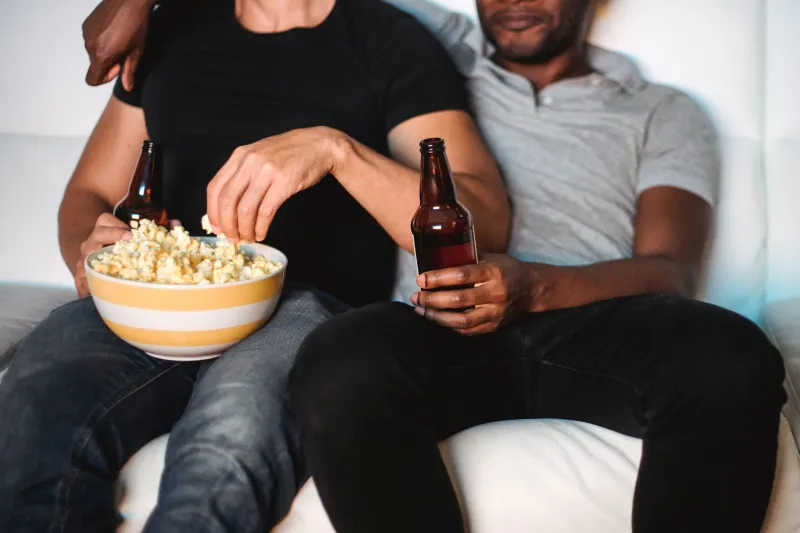
Here's a confession that might get our Cinema Brewers membership revoked: we've sat through entire films with a perfectly exceptional craft beer sitting at room temperature, completely ignored, because we were too deep in the plot to remember it existed. The beer warmed. The head dissolved. A $14 bottle of barrel-aged stout became a lukewarm puddle of missed opportunity.
We did this in the name of immersion. And honestly? We were doing it wrong.
The prevailing gospel of modern streaming culture is momentum. Don't stop. Don't pause. Certainly don't interrupt a tense third-act reveal to stick your nose in a glass of saison and think about whether you're picking up white pepper or just wishful thinking. But a growing body of research — and a growing community of people who take both their cinema and their craft beer very seriously — suggests that the deliberate pause might actually be the highest form of engagement with both mediums.
Your Brain on Multitasking (Spoiler: It's Not Great)
Let's start with some uncomfortable cognitive science. When you're watching a film while simultaneously consuming anything — food, drink, your third scroll through your phone — your brain is running what researchers call divided attention. You're not fully processing either experience. The flavor compounds in that double dry-hopped IPA are registering somewhere in your sensory cortex, sure, but they're competing with dialogue, score, cinematography, and whatever emotional labor the director is demanding of you at that particular moment.
Studies on multisensory perception have shown that taste and smell processing — which together constitute what we experience as "flavor" — are remarkably context-dependent. The same beer genuinely tastes different depending on your emotional and cognitive state. A complex, funky farmhouse ale consumed during a high-anxiety thriller sequence will read differently than the same beer sipped in a quiet moment of contemplative cinema. Your palate, it turns out, is not operating in isolation from your prefrontal cortex.
So when you're white-knuckling a suspense sequence and absentmindedly draining your glass, you're not tasting the beer. You're just drinking it. There's a difference, and it's enormous.
The Case for the Intentional Pause
This is where things get interesting — and where the Cinema Brewers philosophy starts to feel less like a quirky lifestyle brand and more like a legitimate framework for better living.
The intentional pause — stopping the film at a deliberate moment, lifting your glass, actually engaging with what's in it — does something remarkable to both experiences. First, it creates what psychologists call an "encoding spike" in memory formation. Moments that are interrupted and resumed are often remembered more vividly than unbroken experiences, a phenomenon related to the Zeigarnik effect, which describes how our brains cling to incomplete tasks. When you pause a film, your brain flags that moment as unresolved. When you return to it, the emotional pickup is sharper.
Meanwhile, the beer gets its due. You're not just swallowing — you're evaluating. You're noticing the way a West Coast IPA's bitterness lingers on the back of your palate, or how a milk stout's sweetness softens as it warms slightly in your hand. These are the observations that separate casual drinkers from people who actually understand what a brewer was trying to achieve.
Choosing Your Moment: The Pause as Editorial Decision
Not all pauses are created equal. The skilled Cinema Brewer treats the pause like a director treats a cut — it should mean something.
Consider pausing at the end of an act break, when tension has peaked and the narrative is catching its breath. This is structurally sound: you're not interrupting momentum, you're honoring the natural rhythm of the storytelling. A great film has breathing room built into it. Use it.
Alternatively, try pausing immediately after a scene that hit you emotionally. Sit with the beer. Let the feeling and the flavor exist in the same moment. This is where the pairing concept becomes genuinely profound — the right beer in the right emotional context creates a sensory memory that neither the film nor the beer could manufacture alone. Ask anyone who's ever cracked a perfectly tart Flanders red ale at the exact moment a film surprised them with something quietly devastating. That memory sticks.
Some Cinema Brewers regulars have developed their own rituals: one pause per act, always at a scene transition, always with a deliberate nose before the sip. Others pause at chapter markers if they're watching on a disc. The specific method matters less than the intention behind it.
What This Does to Your Critical Thinking
Here's the part that genuinely surprised us when we started experimenting with intentional pausing: it makes you a sharper critic of both the film and the beer.
When you stop and actively taste, you're forced to articulate — even just internally — what you're experiencing. Is this beer working with this movie? Why or why not? That question, applied reflexively over the course of an evening, trains your palate and your critical eye simultaneously. You start noticing things. You start having opinions. You start understanding why you have those opinions.
Binge-watching culture has inadvertently trained us to consume passively. We watch because the next episode autoplays. We drink because the glass is there. The intentional pause is an act of resistance against that passivity — a small, deliberate choice to be present in your own leisure time.
A Practical Starting Point
If you've never tried this and you're skeptical, start simple. Pick a film you already love — something you know well enough that pausing won't feel like you're losing the thread. Grab a beer you've been meaning to pay closer attention to. Set a loose intention: you'll pause twice, at natural breaks, and you'll spend sixty seconds with the beer before you hit play again.
That's it. Sixty seconds. Nose it. Sip it. Think about what you're tasting and how it's sitting alongside the emotional temperature of the film. Then return.
We'd wager that by the end of the movie, you'll remember both experiences more clearly than you would have otherwise. The beer will have mattered. The film will have landed differently. And you'll have spent an evening not just consuming culture, but actually engaging with it.
Which, when you think about it, is exactly what Cinema Brewers is about.