Factory Settings: How Corporate Money Turned Blockbusters and Brewery IPAs Into the Same Beige Product
There's a game you can play the next time you're standing in a grocery store beer aisle. Pick up any IPA with a vaguely outdoorsy name, a can featuring some combination of mountains, waves, or a cartoon animal, and a color palette that says we're fun but not weird. Now try to remember who makes it. Not the brand name on the can — the actual company. Odds are, you'll find a small logo somewhere that traces back to Anheuser-Busch InBev, Molson Coors, or a private equity portfolio that also owns four other "independent" craft breweries you thought were local.
Now open a new browser tab and look up the production company behind the last big franchise film you watched. Follow the money up the chain. You'll arrive, eventually, at a media conglomerate whose primary obligation is to shareholders, not to storytellers.
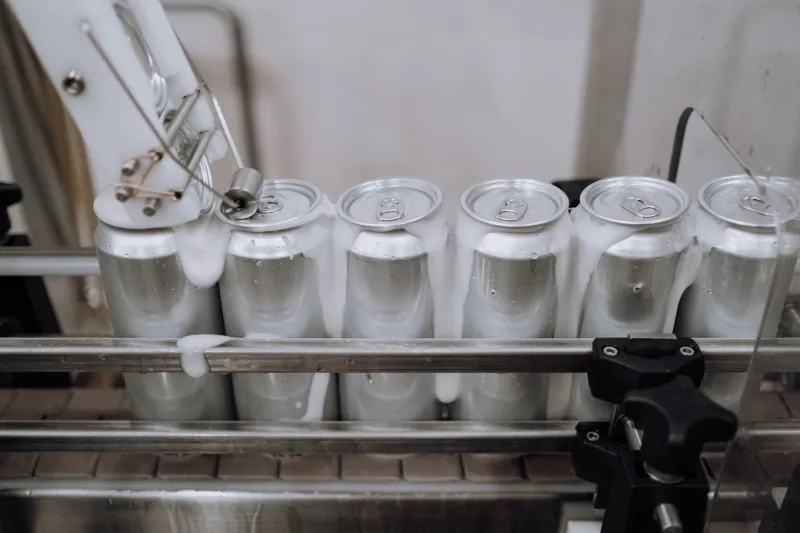
Welcome to the factory floor. Population: your entertainment and your beer.
The Acquisition Playbook
The consolidation story in craft beer is well-documented at this point, but it's worth spelling out because the mechanism is almost identical to what happened in Hollywood. A small, innovative brewery builds a devoted regional following by doing something genuinely weird and specific — maybe it's a Colorado operation famous for its high-altitude lagers and barrel-aged experiments, or a Brooklyn outfit that made its name on aggressively funky farmhouse ales. The brand has a voice. It has a community. It has a reason to exist.
Then a larger entity — either a macro-brewery or a private equity firm with a craft beverage thesis — makes an offer. The founders, often exhausted and undercapitalized, take it. The new owners promise creative autonomy. For about 18 months, things look the same from the outside. Then, quietly, the recipes get tweaked. The weirder seasonal releases get discontinued. The flagship IPA gets reformulated to be a little less aggressively bitter, a little more broadly approachable. Distribution expands. The beer starts showing up in airports. The locals notice something is different but can't quite name it.
This is the exact arc that played out when Disney absorbed Fox Searchlight, when Amazon acquired MGM, when every mid-size studio with a distinctive identity got folded into a content pipeline. The individual titles keep coming. The logos stay the same. But the appetite for genuine risk — for the movie or the beer that might alienate half its audience in order to deeply connect with the other half — quietly disappears.
The Focus Group Problem
Both industries have developed sophisticated tools for predicting consumer response before a product reaches market, and both industries have discovered that these tools are extraordinarily good at producing mediocrity.
Film studios test-screen their tentpoles with audience panels who are asked to rate scenes, endings, and character arcs on numerical scales. The scores get aggregated. The rough edges get sanded down. An ending that divided the test audience 60/40 gets replaced with one that polls 85/15. What you lose in that transaction isn't the bad ending — it's the ambiguity, the thematic complexity, the willingness to leave the audience with something to argue about on the drive home.
Large-scale craft beer production has its own version of this. Sensory panels, consumer taste tests, flavor profiling software — these are all legitimate quality control tools that, when applied to the question of "is this beer technically correct," work great. When applied to the question of "should we make this beer," they tend to produce the same answer every time: make it a little juicier, a little less bitter, a little more like the thing that already sold well last quarter.
The result, in both mediums, is a product that is technically accomplished and spiritually inert. Nobody hates it. Nobody loves it. It performs.
What Gets Engineered Out
Let's get specific, because generalities are easy.
In film: the studio comedy with an actual point of view has nearly vanished from multiplexes. The mid-budget adult drama — the kind of movie that used to anchor a studio's prestige slate and win awards without requiring a cinematic universe — is now largely the province of streaming platforms, where it gets buried in an algorithm. The films that get theatrical releases at scale are, with notable exceptions, either franchise extensions or animated features. Both categories are engineered for repeat viewership and merchandise potential, not for the kind of singular artistic vision that makes a movie genuinely strange and irreplaceable.
In beer: the regional distinctiveness that once made American craft brewing such a fascinating map is flattening. The session IPAs and hazy pale ales filling shelves from Portland, Maine to Portland, Oregon are increasingly interchangeable. The funky, challenging, locally-specific styles that defined the first generation of craft brewing — the California commons, the Midwest cream ales with actual character, the Pacific Northwest ales that tasted like the forest they were made in — are getting crowded out by whatever format is currently dominating Untappd ratings and Instagram aesthetics.
What's being engineered out, in both cases, is specificity. The quality of having been made by a particular person, in a particular place, with a particular obsession that not everyone will share.
The Holdouts
Here's where the story gets less grim, because the holdouts are real and they're worth celebrating.
In film, the independent and arthouse sectors — despite chronic underfunding and distribution challenges — are still producing work of genuine idiosyncrasy. Directors like Kelly Reichardt, Ti West, and Kogonada are making American movies that couldn't have been generated by a committee. Distributors like A24 and MUBI have built real audiences for work that refuses to be optimized.
In beer, the truly independent craft sector — and here the word "independent" matters enormously, because the Brewers Association has a formal definition that excludes macro-owned brands — is still full of operations making beer that reflects a specific geography, a specific obsession, a specific brewer's weird fixation on pre-Prohibition lager styles or Norwegian kveik yeast or whatever else keeps them up at night.
These are not mass-market products. They require you to seek them out. That seeking is part of the experience.
Vote With Your Wallet and Your Remote
The uncomfortable conclusion here is that both of these problems are, in part, consumer problems. The franchise films keep getting made because they keep making money. The safe, broadly appealing IPAs keep filling shelf space because they keep moving units.
The antidote isn't complicated, even if it requires some effort. Check the Brewers Association's independent craft brewery seal before you buy. Seek out the regional taproom that's been operating out of a converted garage for six years and has a menu full of things you've never heard of. Buy a ticket to the small film at your local art house theater instead of waiting for it to hit a streaming platform. Follow the weird directors. Follow the weird brewers.
The factory will keep running regardless. But you don't have to eat what it produces.